I have lived in Northern Ireland for over 20 years, and the best way I can describe it is this: living here often feels like being trapped inside the mind of Two-Face, the character from DC’s Batman comic book series. In my experience, one side of Northern Ireland is driven by an unwavering desire for order, tradition and control. The other is more emotionally charged, reactive and, at times, unpredictable. The faces change depending on where you are and who you are with, but the tension between them remains.

At times, it also feels like being trapped inside the house occupied by Hugh Grant’s character in Heretic, a place that constantly tests your convictions, resilience and sense of self. Yet, despite the passing of time, Northern Ireland often feels caught in a time warp where the rest of the world moves on, while some things here never seem to change.
A story my parents and grandparents often told, and which was apparently based on a real incident, involved an Indian student walking through Belfast during the Troubles. He was stopped by armed local men and asked where he was from. When he replied that he was Indian, they reportedly asked whether he was a Catholic Indian or a Protestant Indian. He answered, somewhat sheepishly, “Hindu.” Whilst I don’t fully recall the exact exchange, which was considerably funnier in delivery, the gist of the story was an Indian student walking through Belfast during the Troubles, minding his own business, who was questioned by locals and, just when he thought he was in the clear, was asked whether he was a Catholic Indian or a Protestant Indian.
The story was often shared around the dinner table whilst I was growing up to explain the complicated nature of discrimination and racism that existed in Northern Ireland at the time. Growing up, I was also told stories of signs outside establishments in the UK declaring variations of “No Blacks, No Irish, No Jews, No Dogs.” I heard about how racist the UK was back then, and how, whilst the rest of the world was dealing with racism, Northern Ireland decided to reinvent racism by adding sects of Christianity to the mix.
I have often sensed that some Irish people take pride in the idea that Ireland was not involved in slavery in the same way as Britain or the United States. Perhaps this is partly why conversations around race can sometimes feel different here. There appears to be less of the historical guilt associated with slavery that exists among some of Ireland’s white counterparts elsewhere. Yet when you dig a little deeper into the history, the picture becomes more complicated. Irish slave owners did exist. Their names appear in historical records, registries and documented accounts. They may have been fewer in number, but they existed nonetheless.
What I often find particularly frustrating is the contrast between Ireland’s international image as a champion of social justice and what living among the Irish can sometimes feel like in practice. Ireland has developed a strong global reputation for solidarity, activism and identifying with oppressed peoples. Yet, from my perspective, some everyday attitudes towards personal boundaries, autonomy and difference can feel strangely at odds with that image.
Take the story of the Indian student during the Troubles. He was visibly foreign. He clearly was not a local participant in Northern Ireland’s sectarian conflict. So why was he stopped in the first place? Why did complete strangers feel entitled to interrupt him, question him and demand that he explain who he was and where he belonged? From my perspective, there is something uncomfortable in that sense of entitlement to another person’s time, attention, space and even safety. It is a mentality I find difficult not to associate, at least conceptually, with the behaviour of those who once believed they had the right to exercise control over other human beings.
Of course, that incident happened decades ago. Northern Ireland has changed enormously since the Troubles, so surely such attitudes towards other people’s autonomy have changed too.
But have they?
During my brief time studying in Derry~Londonderry, I once received feedback criticising my decision to keep to myself during breaks rather than socialising with other students. I remember finding the criticism bizarre. It was a break. My free time. Why should anybody else have an opinion about how I chose to spend it?
By that point, I was hardly inexperienced in either education or employment. I had studied in Nigeria and at universities across different parts of the UK, including the University of Dundee in Scotland, St George’s University of London, Queen’s University Belfast and, later, the Open University. I had also worked in different environments across Scotland, England and Northern Ireland. Yet nowhere else had I encountered someone attempting to instruct me on how I ought to spend my own break.
Last time I checked, free time belongs to the person whose time it is.
And perhaps that is why the incident bothered me more than somebody giving unwanted advice about socialising ordinarily would. Historically, where do we find the most extreme examples of people having their time, movement, relationships and personal autonomy controlled and micromanaged by others?
Slavery.
I am not suggesting that being criticised for spending a university break alone is remotely equivalent to slavery. Obviously, it is not. What interests me is the underlying concept of entitlement: the belief that another adult’s time, choices or personal boundaries are somehow open to supervision simply because somebody else believes they know how that person ought to behave.
Perhaps the more uncomfortable question is not whether slavery still exists in the form it once did, but how many of the smaller assumptions that made such systems possible can survive long after society has convinced itself that it has moved beyond them.
But perhaps one of the most distressing aspects of my experience living in Northern Ireland has been what can sometimes feel like an assumption that free labour can be extracted from female ethnic minorities like myself, while our autonomy is simultaneously disregarded. What makes this particularly uncomfortable is that many of my negative experiences of this behaviour have not come from men, but from Irish women.
There have been moments when my time, knowledge, labour or willingness to help have appeared to be treated not as something I was free to offer, negotiate or withhold, but as something others simply expected access to. Saying no, setting boundaries or choosing not to participate could then become the problem, rather than the original assumption that I should have been available in the first place.
That distinction matters. Helping someone because you freely choose to is generosity. Contributing because you have freely agreed to do so is participation. But when another person begins from the assumption that your labour, time or attention should be available to them without compensation or meaningful consent, something very different begins to emerge.
And perhaps this is where Northern Ireland has challenged some of my assumptions about solidarity between women. I had expected that women, particularly those familiar with conversations about equality and discrimination, might be especially sensitive to questions of autonomy and unpaid labour. Instead, some of the encounters that have felt most combative when I have tried to protect my boundaries have been with other women.
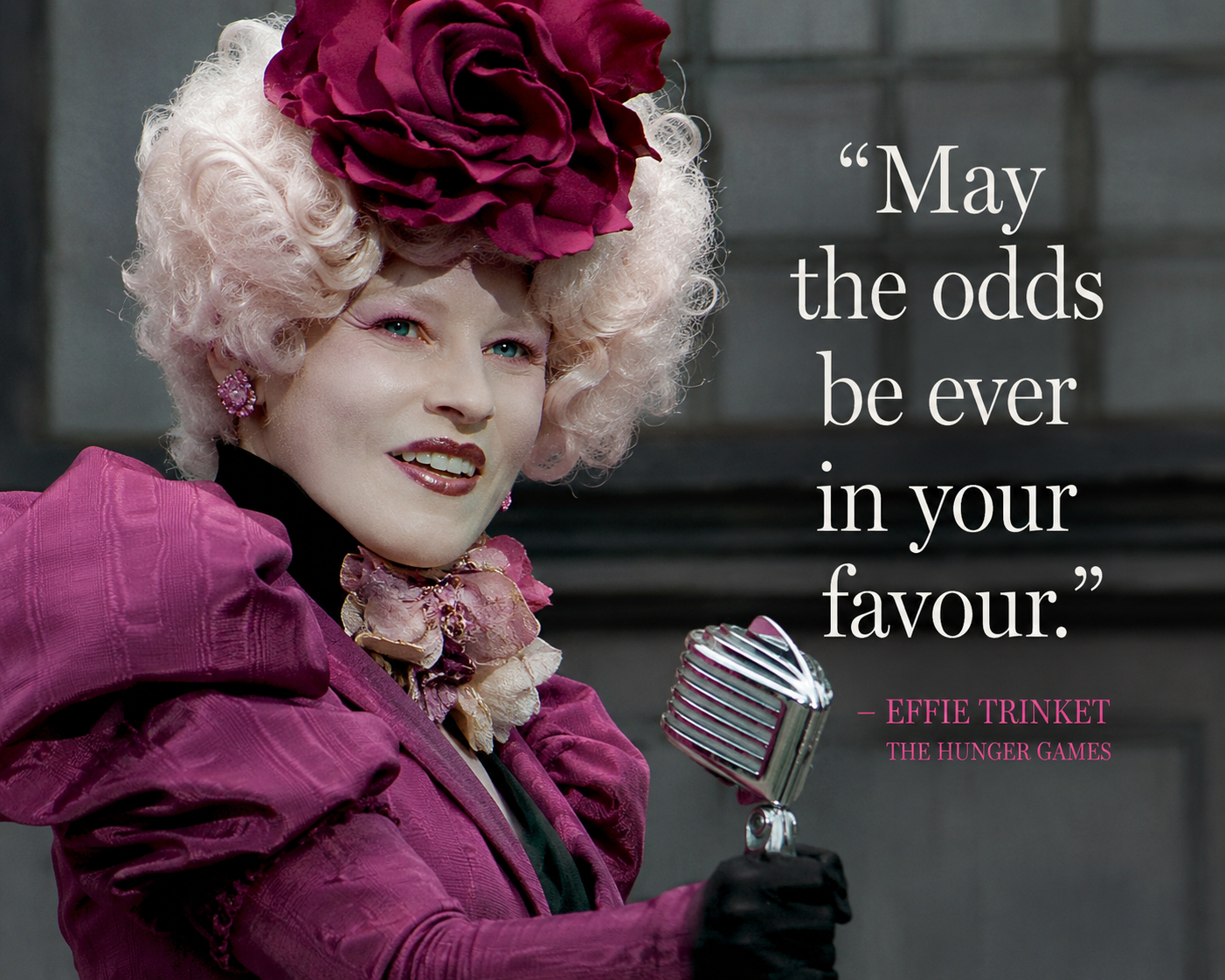
Right, before I continue. I think it is only fair that I share a bit about my experience prior to moving to Northern Ireland. I feel this might help the audience understand the lens as to which I judge or compare Northern Ireland to. I lived in nigeria for most of my early years before moving to belfast aged 14. Living in Nigeria often felt like living in the fictional world of The Hunger Games. Not because children were forced into an arena, but because survival itself often felt like the contest. Outside the political class and those connected to power in Abuja; many ordinary Nigerians lived in a constant struggle to get by.
Meanwhile, those in positions of power often seemed insulated from the daily realities facing everyone else. The average Nigerian fought to survive while politicians offered speeches, promises and prayers, as though saying, “May the odds be ever in your favour.”
For those fortunate enough to leave Nigeria, escape rarely meant complete freedom. Sooner or later, a distant relative, family acquaintance or unexpected caller might appear, convinced they had acquired an involuntary claim to whatever you owned, earned or achieved outside Nigeria. It rarely mattered whether you were struggling or thriving. The mere fact that you were abroad was, for some, reason enough to believe they were entitled to a share, all in the name of family obligation or charity. It was never just about money. Some also felt entitled to your time, your presence, your attention and even your peace.
People migrate to different countries for different reasons. Some are searching for peace and a quiet life. Some move for security, others for better opportunities, and some simply want the freedom to experience life somewhere different. People also have different ideas about what they want that new life to look like.
Personally, I have always believed that, provided someone follows the law and respects the rules of the society they live in, they should largely be free to live their life as they wish. I am a British citizen, so naturally I would like to think that, as long as I follow the law, pay my bills and fulfil my responsibilities, how I choose to live the rest of my life is largely my own business.
Yet, in my experience, that freedom can sometimes feel less straightforward for ethnic minorities living in Northern Ireland.
Looking back, I sometimes think of my experience here through the two Christian girls in Heretic, the Hugh Grant film I mentioned earlier. They enter an unfamiliar environment with their own beliefs, expectations and assumptions about how the world works, only to gradually discover that the environment they have entered operates according to rules and expectations they did not create.
There is another aspect of Heretic that I find particularly interesting when thinking about Northern Ireland: the relationship between host and guest.
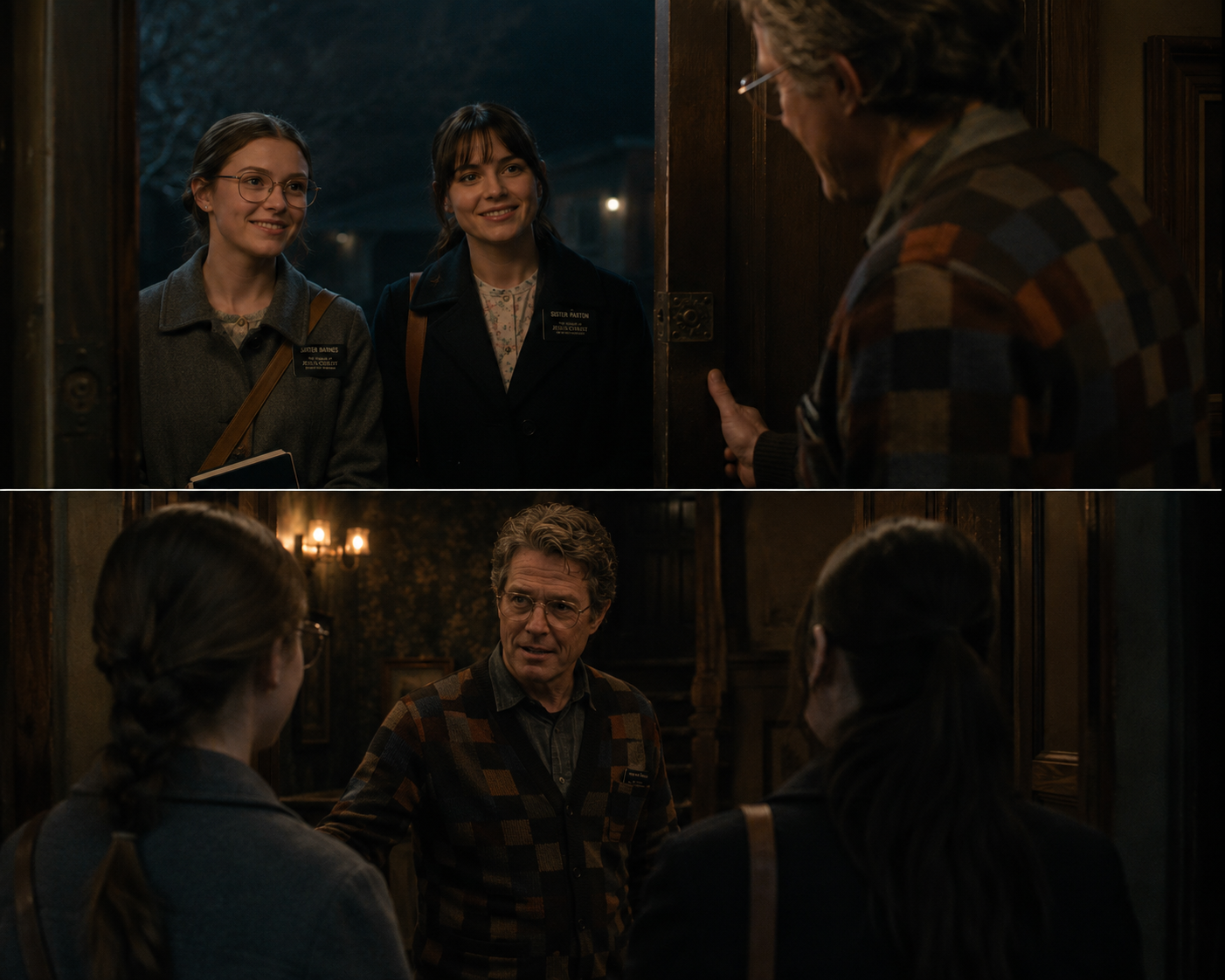
The two young women knock on Mr Reed’s door, but he chooses to answer it. More importantly, he chooses to invite them into his home. From that moment, according to the ordinary rules of hospitality, he is the host and they are his guests. They have responsibilities towards him and his home, but he also has responsibilities towards them. Inviting someone into your space does not give you ownership over them. If anything, being the host creates a greater responsibility to respect the safety and autonomy of the people you have welcomed inside.
Perhaps that is another reason the film resonates with me when I think about Northern Ireland.
Because when exactly does a guest stop being a guest?
One of the peculiarities I have observed about being an ethnic minority in Northern Ireland is how easily someone can remain a “foreigner”, an “ethnic minority” or somebody perceived as being from somewhere else, even after spending years building a life here. Sometimes it can feel as though belonging remains conditional, something granted and withdrawn depending upon the circumstances.
Yet something curious can happen when that same ethnic minority person becomes useful to Northern Ireland’s image.
Suddenly, they are local.
When a photograph is needed to demonstrate diversity, when an organisation wants to showcase inclusion, or when a success story provides an opportunity to present Northern Ireland positively, the stranger can rapidly become one of “our” people. The language of difference gives way to the language of belonging.
The phenomenon becomes even more interesting when someone leaves Northern Ireland and succeeds elsewhere. A person who may previously have been treated as an outsider can suddenly be reclaimed through geography: Northern Irish, Belfast-born, Belfast-raised, educated here, trained here, one of ours.
Perhaps there is nothing uniquely Northern Irish about that. Countries and communities everywhere have a habit of claiming successful people. But in a place where questions of identity and belonging already carry extraordinary weight, I find the contradiction particularly striking.
You cannot perpetually treat someone as a guest while they are sitting quietly in your house, only to declare them a member of the family when somebody arrives with a camera.
And perhaps that is the real problem with conditional belonging. If I am local enough to represent you when my presence makes Northern Ireland look good, surely I am local enough to determine how I live when nobody is watching.
There are countless stories and articles documenting ethnic minorities experiencing discrimination from people on both sides of Northern Ireland’s traditional sectarian divide. My own experiences, however, have been somewhat more confusing.
I am Catholic, but I attended a predominantly Protestant boarding school in Northern Ireland. Ironically, the only bullying I experienced there came from the only other Catholic student in my year. As a result, despite being Catholic myself, I often felt more comfortable around Protestants than Catholics.
For me, the Protestant environment I experienced felt predictable. Follow the rules, clean up after yourself, pay your own way and, generally speaking, people left you to your own devices. Coming from my childhood experience in Nigeria, I actually appreciated that enormously.
Later in life, however, I undertook a graduate course in Derry~Londonderry, a predominantly Catholic city, and encountered a very different experience. It was there that I received feedback questioning my decision to spend my breaks by myself rather than socialising with other students. I found the idea that anyone should have an opinion about how I spent my own free time bizarre.
I did not enjoy my experience of living in Derry~Londonderry. During my time there, there was also an incident in which an ethnic minority male student was reportedly assaulted by locals. What disappointed me almost as much as hearing about the incident was what I perceived to be the institution’s response.
By then, I had already studied in several different educational environments. I had attended university in Dundee, studied in London at St George’s University of London, and later studied at Queen’s University Belfast. Perhaps those experiences had shaped what I expected from a university when something happened involving the surrounding community.
I had become accustomed to universities taking an active role in the environments in which their students lived and studied. A university does not exist in isolation from its surrounding community. Students move between campuses, hospitals, accommodation, libraries and other facilities, often at unusual hours.
During my time at the University of Dundee, for example, transport was provided between facilities associated with the university, including the main university area and Ninewells Hospital. My experiences in Dundee and at St George’s gave me an expectation that student safety was something an institution actively planned for rather than something it simply advised students to manage amongst themselves.
In Derry~Londonderry, my impression was different. Following the reported assault, much of what I remember hearing centred around students looking out for each other. That frustrated me. Of course, students would look out for themselves and each other, but where was the institutional responsibility? What measures would be introduced? What conversations would take place with the surrounding community? What would change to reduce the likelihood of another student experiencing the same thing?
Especially given the troubled history of Derry~Londonderry, I expected the university to be somewhat more hands-on. This felt particularly important for an institution seemingly keen to attract international students, many of whom might arrive knowing relatively little about the Troubles, Northern Ireland’s history or the social dynamics of the communities into which they were moving.
Perhaps measures were being taken behind the scenes that I knew nothing about. But as a student at the time, that was not the impression communicated to me.
It also did not help that, approximately a year later, when I raised concerns about travelling late at night from Derry~Londonderry to Belfast by train and then bicycle, and suggested that a particular session be made available virtually, I was informed that there could be no guarantee that sessions in Derry would not finish late.
Then, during that summer, Northern Ireland experienced serious disorder following allegations that a local girl had been sexually assaulted. Suddenly, conversations about the safety and welfare of women seemed considerably more urgent.
I could not help noticing the contrast.
When I had raised concerns about my own safety travelling home late at night, I had not felt that same urgency. Now, when the young woman at the centre of the wider public concern was white, female safety appeared to command considerably greater attention. Whether race actually explained that difference is something I cannot prove. But as an ethnic minority woman who had previously raised concerns about her own safety, it was difficult not to notice how differently those concerns appeared to be received.
Even the physical environment felt different. I had generally felt safe around the University of Dundee because security and CCTV were visibly present. In Derry~Londonderry, one of the strongest physical manifestations of security I remember was the gated student accommodation in which I lived. Yet even that did not particularly make me feel secure. The accommodation was in a slightly dilapidated condition, and the gates were locked overnight, reopening again in the morning.
Rather than making me feel protected, it sometimes made me feel caged.
That contrasted sharply with the independence I had experienced in student accommodation elsewhere, where I had been accustomed to being able to come and go at any hour. Again, I was an adult. I did not want an institution deciding when I should be safely behind a gate. I wanted an institution to create an environment in which I could exercise the ordinary freedom of an adult while being reasonably protected as one of its students.
And perhaps that distinction captures something important about my experience of Northern Ireland more broadly. There is a difference between making someone safe and restricting their freedom in the name of safety. There is a difference between building community and demanding participation in it. And there is a difference between welcoming someone into your society and expecting them to surrender parts of their autonomy in exchange for belonging.
Northern Ireland also seems to have a peculiar way of approaching some of its social problems.
When a student was reportedly assaulted during my time at Dundee, despite the incident not occurring on campus, my recollection is that additional night transport, which I believe was provided through Dundee City and the University, was made available to help students travelling back towards university accommodation after nights out. The response, as I experienced it, was essentially: how do we make the shared environment safer so students can continue living their lives?
In Northern Ireland, I have sometimes encountered a very different instinct: separation.
This is, after all, a place where physical peace walls still separate some predominantly Catholic and Protestant communities. Perhaps it should not have surprised me, then, that during my time in Derry~Londonderry I encountered an ethnic minority mentoring initiative.
Personally, I found the concept uncomfortable.
If somebody proposed a mentoring scheme explicitly organised around being white, many of us, myself included, would immediately start asking uncomfortable questions about racial exclusion. Yet explicitly separating ethnic minority students into their own mentoring structure appeared capable of being presented as progressive.
Apparently, in Northern Ireland, that could simply be a normal Tuesday.
My objection was not to ethnic minority people supporting one another. People should be free to form whatever communities and support networks they find useful. My objection was to the assumption that racial categorisation was necessarily the appropriate institutional solution in the first place.
If ethnic minority students were experiencing isolation, discrimination or difficulty integrating into their academic or professional environment, why was the answer to pair ethnic minority students with ethnic minority mentors primarily on the basis of their minority status? Why not examine the environment into which they were supposedly being integrated? Why not ask what could be changed so that students from different backgrounds could participate naturally in the same university and professional community?
Sometimes it feels as though Northern Ireland wants newcomers to integrate, but not too much, and certainly not entirely on their own terms.
Or perhaps somebody simply thought an ethnic minority mentoring scheme was the cheapest and most cost-effective solution available: find members of the minority community willing to perform some of the emotional and social labour themselves, call it inclusion, and congratulate the institution on having addressed the problem.
What could possibly go wrong?
Perhaps integration is only part of the problem. Over the years, I have sometimes wondered whether Northern Ireland is entirely comfortable with people who refuse to remain in the boxes initially assigned to them.
There is a peculiar difference between being welcomed somewhere and being permitted to grow there. You can be accepted as the foreign student, the ethnic minority colleague, the helpful woman, the newcomer or even the success story. But what happens when you begin defining success for yourself? What happens when you become ambitious, establish boundaries, build something of your own, or simply decide that the role other people imagined for you is no longer enough?